Saturday, May 13, 2006

Gold; What Type of Gold to Buy


Sponsored By: gold coin

Jewelry

The advantages are:

• Gold Jewelry is the easiest of the gold to buy and has the enjoyment of being able to be worn.

The disadvantages are:

• Retail Jewelry is often marked up by 300% or more in the shops.

• The real value of Jewelry is in the stones and the value is higher then of the gold.

• Most gold jewelry pieces are different and their values are biased.

Bullion coins and Small Bars

Advantages:

• Gold coins and small bars are considered a liquid market, so sellers and buyers can be found when you need them.

• They are easier obtained for smaller investors. Gold coins can be purchased smaller amounts of money (a 1 kilo gold bar starts over$10,000)

• Genuine gold coins have the endorsement of a government mint which has a degree of guarantee to them.

Disadvantages:

• The possibility of fakes that can only be spotted by dealers.

• The difference between buying and selling price of gold coin and small bar is significant vs. most types of investments.

Gold coins and small bars can good gold investment method for people with sums from $100 to $10,000 especially for people who view physical possession as important.

Big bars

Advantages:

• Big bars are traded as a professional market.

• The bars are serial numbered, and usually do not leave the security of industrial strength vaults.

• Fakery appears to have been completely eliminated.

Disadvantages:

• Big gold bars cost big money, around $160,000 each. Not an easy investment for most individuals. In fact to benefit from a competitive standpoint 1 bar is insufficient.

• For the Big gold bars, the smallest trade size the markets will consider exceeds $500,000.

• Big Gold bar trading is for the bigger companies and inaccessible to the private investors.

By Richard Amburn

Sponsored By: gold coin

Tips on what type of gold investment to buy. http://goldcoins.blogspot.com

Article Source: http://EzineArticles.com/?expert=Richard_Amburn

Why You Need To Buy and Sell Gold Coins (Part 6)


Sponsored By: gold coin


Pre-1933 Gold Outperforms Today's Gold Bullion...

Since 1970, an investment strategy that included Pre-1933 gold has been proven to outperform modern gold bullion, gold bars, Krugerrands, Canadian Maple Leafs, or American Eagles.

In fact, $1,000 invested in common date, Pre-1933 Gold coins has a market value of $19,595. But, gold bullion would be worth only $7,429.* Clearly, investing in common date gold coins has paid off handsomely.

Truly Rare Coins Bigger Winners- But, Collectors Universe reports that you would have done even better by acquiring investment quality, U.S. Rare Coins back in 1970. The CU3000 would be worth $54,158 and Mint State, Rare Gold would be worth $74,299 today, far outperforming gold or the Dow over the last 30 years.

Pre-1933 Gold Offers the Best Leverage - As you might expect, classic Pre-1933 U.S. gold coins are directly affected by the rising price of gold. When gold goes up, the generic gold coins follow. However, many people don't realize that Pre-1933 gold coins offer substantial leverage to the gold market and advantages over modern gold bullion coins like American Eagles.

Pre-1933 Gold Soared When Gold Was Flat - However, sectors of the U.S. Rare Coin Market and the gold markets don’t move in tandem. Generic gold coins soared in value in the early 1970’s, in the 1976-1980 Bull Market for coins, and again in the mid-1980’s despite the fact that gold prices were relatively flat.

In today's marketplace, gold trades near 20-year lows and generic Pre-1933 gold is also highly undervalued. Both offer investors a good soure of value during a time when high-tech stocks are crashing, the economy is headed for a recession and inflation is rising quickly.

All of these factors have historically put investors in a position of a flight to safety from paper assets into hard assets. When investors suddenly enter the U.S. Rare Coin Market, the demand can quickly overwhelm the limited supply.

Sponsored By: gold coin

Steve Renner is the CEO of cashcards-goldlynks http://goldlynks.tripod.com

Article Source: http://EzineArticles.com/?expert=Steve_Renner

Why You Need To Buy and Sell Gold Coins (Part 5)


Sponsored By: gold coin

Why You Need To Buy and Sell Gold Coins (Part 5)

Grading coins

The condition of a coin is commonly summarized by a grade. Because the value of collectible coins often varies dramatically with grade and overly generous grading is not uncommon, reasonable grading proficiency is an important skill for collectors. The material presented here is intended only as an introduction to the subject. Grading is a skill that can only be developed over time through referrals to grading guides, consultation with experienced collectors and dealers, and lots of practice.

Published standards set objective criteria for grading, yet some amount of subjectivity is inevitable -- even expert graders will often assign slightly different grades to the same coin. While you can often ask an experienced grader for an opinion, being able to make your own reasonable assessment of grade is your best protection.

An overview of American Numismatic Association standards follows. ANA standards are widely used in the U.S. but are not the only system used. Much of the rest of the world uses the grades Fair, Fine, Very Fine, Extremely Fine, Uncirculated and Fleur-de-coin.

Numerals used in coin grades have been taken from the Sheldon scale (see Glossary).

Uncirculated Coins

Coins with no wear at all are referred to as uncirculated or in mint state (MS). Grades from MS-60 to MS-70 in one point increments are used for mint state coins. Criteria include luster; the number, size and location of contact marks; the number, size and location of any hairlines, and the quality of the strike and overall eye appeal..

An MS-60 coin may have dull luster and numerous contact marks in prime focal areas, as long as there is no wear. To merit MS-65, a coin should have brilliant cartwheel luster (attractive toning is permissible), at most a few inconspicuous contact marks, no hairlines, and nearly complete striking details. Grades from MS-61 to MS-64 cover intermediate parts of this range. Truly exceptional coins may be graded MS-66, MS-67 or, if absolutely flawless, as high as the theoretical maximum of MS-70. Many numismatists consider MS-70 to be an unobtainable ideal.

Terms such as brilliant uncirculated (BU), choice BU, gem BU, select BU and premium BU are still used in lieu of numerical grades by some dealers, auctioneers and others. Correlations between these terms and the numeric MS grades are difficult at best, because of inconsistent usage and in some cases overgrading.

Market values for many uncirculated coins vary dramatically from one grade to the next. Remember that whether a coin is described with a numerical or an adjectival grade, it's only someone's opinion. Until you are comfortable with your ability to grade uncirculated coins, make liberal use of other opinions, such as those available with slabbed coins or from experienced collectors and dealers you trust, or concentrate on circulated coins.

Circulated Coins

For circulated coins the grade is primarily an indication of how much wear has occurred and generally does not take into account the presence or absence of dings, scratches, toning, dirt and other foreign substances (though such information may also be noted).

ANA grading standards recognize 11 grades for circulated coins (listed here with brief, generic descriptions):

AU-58, very choice about uncirculated: just traces of wear on a coin with nearly full luster and no major detracting contact marks

AU-55, choice about uncirculated: small traces of wear visible on the highest points

AU-50, about uncirculated: very light wear on the highest points; still has at least half of the original mint luster

EF-45 or XF-45, choice extremely fine: all design details are sharp; some mint luster remains, though perhaps only in "protected areas"

EF-40 or XF-40, extremely fine: slightly more wear than a "45"; traces of mint luster may show

VF-30, choice very fine: light even wear on high points, all lettering and design details are sharp

VF-20, very fine: most details are still well defined; high points are smooth

F-12, fine: major elements are still clear but details are worn away

VG-8, very good: major design elements, letters and numerals are worn but clear

G-4, good: major design elements are outlined but details are gone; for some series the date may not be sharp and the rim may not be complete.

AG-3, about good: heavily worn; date may be barely discernable
While coins more worn than AG are rarely collected, two additional grades are nevertheless used to characterize them:

F-2, fair -- very heavily worn; major portions may be completely smooth

P-1, poor, filler or cull -- barely recognizable
While not included in the ANA standards, intermediate grades like AU-53,
VF-35, F-15 and G-6 are used by some dealers and grading services. When a grader believes a coin is better than the minimum requirements but not nice enough for the next higher grade "+" or "PQ" may be included (e.g. MS64PQ or VG+) or a range may be given (e.g. F-VF).

Split Grades

When there are significant differences between the obverse and reverse sides, a split grade may be assigned. Split grades are denoted with a "/". For example, "F/VF" means that the obverse is F and the reverse is VF.

The overall grade is often determined by the obverse. An intermediate value may be appropriate when the difference is significant, especially if the reverse is lower. A coin graded MS-60/61 would be considered to have an overall grade of MS-60, and another at MS-65/63 could be considered to have an overall grade of MS-64.

Sponsored By: gold coin

Steve is the ceo of cashgcards-goldlynks rare/gold coin club he was the best isp in 1997 check out his about us page at http://goldlynks.tripod.com this article is free for distribution you can sign up for a free email course on buying and selling rare/gold coins for profit by sending email to gold_coins@walla.com membership of the coins club is free to join at http://goldcoins.blogspot.com

Article Source: http://EzineArticles.com/?expert=Steve_Renner

Why You Need To Buy and Sell Gold Coins (Part 4)


Sponsored By: gold coin

Top Investment Performance

Throughout history, many coin collections have produced substantial long-term profits for their owners. This is particularly true for coin collectors of this century. Indeed, Harold Bareford reportedly purchased a collection of U.S. gold coins for $13,832 in the early 1950s which was resold at auction in 1978 for $1.2 million. A more substantial collector, Louis Eliasberg, built a collection that cost about $300,000. In 1982, it brought $12.4 million at auction.

This investment performance has been well documented by sources as diverse as The Wall Street Journal, Consumer Reports and a host of industry periodicals and guidesheets. What these reports have shown is that carefully selected portfolios of rare coins have had a high rate of long-term appreciation.

Of course, past performance is no guarantee of future results and investments in rare coins do involve risk. While the market performance of different coins varies substantially and no representation can be made that an individual investor's portfolio will enjoy results similar to those that have been documented in the various independent reports and surveys, those reports and surveys illustrate the impressive returns that carefully selected rare U.S. coins can produce.

Tax Benefits

Capital gains on coins can only be taxed at liquidation, when the profits are actually realized. There is no taxation on phantom or undistributed profits as there are with some investments. And unlike most other investments, there is no federal income tax liability on so-called "wash sales" or like-kind exchanges which enable investors to trade their rare coins for other rare coins of equal or greater value

Intrinsic Value

Unlike paper investments, rare U.S. coins have real tangible value you can feel each time you hold one in your hand. Therefore, they offer two ways to build wealth. Carefully selected coins truly offer the best of bullion and numismatics in one investment. They contain the intrinsic security of bullion and can also offer extraordinary profit potential regardless of what precious metal spot prices do. Still, precious metal content is only a relatively small factor in determining the value of many rare U.S. coins whose value is almost solely based on condition, demand and rarity

Historically Significant Beauty

Rare U.S. coins are a part of our history--direct links to America's rich heritage--as timeless and valuable as history itself. For two centuries, U.S. coins have been symbols of American stability, as well as reflections of national pride. Throughout our nation's history, coins have spotlighted our national heroes, paid tribute to our great achievements and commemorated significant events. These truly historic works of art commemorate past sacrifices made in the name of freedom.

Rare U.S. coins acquaint investors with historical figures and events, no matter how far removed by time. The satisfaction of actually owning a piece of history from a bygone era makes investing in rare U.S. coins truly unique. Each coin has traveled a different path through history. As a result, each is a unique embodiment of the hopes and dreams of our founding fathers

Condition

The overwhelming majority of U.S. coins ever minted were circulated. Many coins were lost through attrition and others were damaged by use, thus eliminating any potential for numismatic value. The few surviving uncirculated coins are in a much more pristine condition.

Investment quality coins are primarily those coins rated in the 11 uncirculated grades, 60 and above, on the American Numismatic Association's 70 point grading scale. A coin's grade is a measure of its condition or state of preservation. The higher the grade, the better the condition.

Uncirculated coins fall into two broad categories: Proof (PF or PR) and Mint State (MS). Mint State coins were originally meant for circulation but never were circulated, so they remain in the same condition today as when they were minted. Proof coins were never meant for circulation, thus they received very careful handling and were specially struck at least twice on highly polished planchets.

The beauty of a coin can attract collectors as well as investors, and hence increase demand for a particular coin or set. This increased demand can result in rising values. Eye appeal is affected by several factors including the beauty of a coin's design, the minting process used, the fullness and sharpness of its strike, the toning, the brilliance of its luster and the amount of wear and number of blemishes on the coin's surface

Portfolios or Collections?

The age-old description of coin collecting as the "Hobby of Kings" is both accurate and misleading... accurate in conveying the outdated perception that coin collecting is restricted only to the very wealthy, misleading in that the number of collectors has steadily increased and has been estimated by the American Numismatic Association to include as many as 7-10 million coin buyers in the United States alone. Typically, the coin collector collects coins for their rarity and historical value. Collectors view their coins as rare art and as the tangible remnants of the cultural and economic forces that created them.

The investor begins from a different starting point--the fact that coins of proven rarity have shown remarkably high rates of appreciation. He sees the economic results of the pleasures of collecting and makes his original purchases with profits as his only motive.

However, we have found that the line between those of our clients that are collectors and those that are investors has become increasingly blurred. Collectors can't help but be pleased when coins that they sell bring an attractive profit. Investors begin to see their coins as works of art and become knowledgeable about the circumstances of their minting and the era in which they were circulated.

Both collector and investor come to realize that their intellectual curiosity, aesthetic sensibilities and enjoyment in our country's past can be used to create a collection that becomes an important store of value, a way to accumulate wealth that can be passed on to future generations--or used to fund their own retirements.


Sponsored By: gold coin

Steve is the ceo of cashgcards-goldlynks rare/gold coin club he was the best isp in 1997 check out his about us page at http://goldlynks.tripod.com this article is free for distribution you can sign up for a free email course on buying and selling rare/gold coins for profit by sending email to gold_coins@walla.com membership of the coins club is free to join at http://goldcoins.blogspot.com

Article Source: http://EzineArticles.com/?expert=Steve_Renner

Why You Need To Buy and Sell Gold Coins (Part 3)


Sponsored By: gold coin

Putting Rare Coin Market Cycles to Work for You...

Until recently many people believed U.S. stocks would go up forever.

However, recent crashes in high tech stocks and the overall stock market correction left many investors with huge losses. Clearly, market cycles are changing.

The return of high inflation, combined with a slowing economy, suggests it's more important than ever to move into safer, more profitable investments in the coming market cycle.

Balance and Diversify Your Portfolio - We believe you can profit handsomely by diversifying your portfolio with investments currently undervalued. Everyone agrees gold, hard assets, and commodities have been out of favor in the past decade. For many reasons, we feel these sectors are most likely to be top performers in the next market cycle.

Move To Hard Assets in Bad Economic Climates - For that reason, it’s important to consider moving into hard assets, gold, and U.S. Rare Coins. Prices are attractively low today compared with past market highs. The table below details recent cycles for the U.S. Rare Coin Market showing increases ranging from 348% to 1,195%.

$1,000 Invested in Rare Coins Worth $57,977 - Collectors Universe researched the U.S. Rare Coin Market carefully based on a study of 3000 Rare Coins. The graph above shows $1,000 invested in rare coins in 1970 would be worth $57,977. The conclusion is that U.S. Rare Coins have produced superior profits over gold bullion or Dow Stocks.

Buy Rare Coins During Market Lulls - Since January of 1970, the U.S. Rare Coin Market has had eight very definitive market cycles. There have been three complete Bull and Bear Market cycles since 1970. To maximize profits, collectors prefer to acquire coins that are currently undervalued. They hold their coins and wait until a Bull Market when investors move in and bid up coin prices– then they sell and take their profits.

The most profitable period for the U.S. Rare Coin Market showed increases of 1,195% from December of 1975 through March of 1980. This market cycle parallels a time of high inflation in the U.S., rising gold prices, and a very weak economy– a market cycle that appears to be on the horizon ahead.

Other Rare Coin Market cycles since 1970 showed increases of 665% and 348%. Past performance is no guarantee of future value, but it is an indication of just how volatile and profitable collecting U.S. Rare Coins can be in uncertain economic climates when there's a flight to safety from stocks to hard assets.

Sponsored By: gold coin

Steve is the ceo of cashgcards-goldlynks rare/gold coin club he was the best isp in 1997 check out his about us page at http://goldlynks.tripod.com this article is free for distribution you can sign up for a free email course on buying and selling rare/gold coins for profit by sending email to gold_coins@walla.com membership of the coins club is free to join at http://goldcoins.blogspot.com

Article Source: http://EzineArticles.com/?expert=Steve_Renner
Why You Need To Buy and Sell Gold Coins (Part 2)


Sponsored By: gold coin

Why You Need To Buy and Sell Gold Coins (Part 2)

How to Collect Rare Coins

For Fun and Profit

Time has proven that collectors tend to make the most money in rare coins because they search out "undervalued coins" and buy during market lulls. Buying in today's market climate offers you superb upside profit potential.

PUT IN PERSPECTIVE – Rare coins have an extremely limited, fixed supply which has historically increased in value when demand overwhelms availability. This fact is documented in the enclosed "Dow-to-Gold Report." It clearly shows how rare coins go up as well as down in price with varying market cycles. We believe the most successful Rare Coin portfolios were built in down markets by systematically assembling a variety of choice, rare, and desirable coins, with a three to five year, or longer, holding period in mind.

HAVE A PRECISE FOCUS – Thousands of coins have been issued over the past 200 years. Very few collectors are experts on more than a few types of coins. For that reason alone, it's important to build a relationship with a firm that employs a team of knowledgeable Rare Coin Specialists and Numismatic Experts that are recognized as pillars of authority throughout the industry. Together, we can help you define your areas of interest, your investment goals, and our team of specialists can then guide you to a specific area of U.S. Coins designed to be both profitable and extremely enjoyable.

THE FOUR FACTORS FOR SUCCESS – To profitably build a balanced and diversified Hard Asset Portfolio, you need to know the driving forces behind the U.S. Rare Coin Market:

* STRONG DEMAND – We recommend U.S. Rare Coins that have a broad base of both active investors and collectors. The more wealthy, sophisticated, and avid the base of buyers in an area, the more successful your portfolio should be in the long run.

* SMALL SUPPLY – We recommend U.S. Rare Coins of the highest quality for the date that you can afford. These are always the hardest to find, most desirable collector coins and have historically been top market performers. In our opinion, these coins are always in demand by collectors and will be the easiest coins to liquidate later, and turn the best profits.

* STRONG PERFORMANCE HISTORY – Take the time to review the price history of any rare coin you purchase. Rare coins that have a good history of 200% to 300% price increases during recent bull markets, usually offer your an excellent profit potential in the next hot market. While past performance is no guarantee of future value, undesirable coins are losers in any market. It is of utmost importantance to remember that each rare coin must stand on the value of its own individual merit related to grade, price, eye appeal, and rarity.

* GENUINELY RARE – Finally, we recommend you acquire a selection of Genuinely Rare United States coins. There are fundamentally two ways to determine a coin's rarity. That is "Condition Rarity" and "Absolute Rarity." Condition Rarity is a coin that is rare in higher grades. Some coins are common in worn, circulated grades, yet there could be only five coins known to exist in higher mint-state grades of MS-63 to MS-65. Absolute Rarity is a coin that is rare in any grade. These are truly desirable gold coins that are hard to locate and acquire in all grades. These few coins that are Absolutely Rare in any grade are the "Blue Chip Recommendations" of the U.S. Rare Coin Market.

Sponsored By: gold coin

Steve is the ceo of cashgcards-goldlynks rare/gold coin club he was the best isp in 1997 check out his about us page at http://goldlynks.tripod.com
this article is free for distribution
you can sign up for a free email course on buying and selling rare/gold coins for profit by sending email to gold_coins@walla.com
membership of the coins club is free to join at http://goldcoins.blogspot.com

Article Source: http://EzineArticles.com/?expert=Steve_Renner
Why You Need To Buy and Sell Gold Coins (Part 1)


Sponsored By: gold coin

The Value of Gold in a Era of Paper Assets, Stocks, Bonds and Mutual Funds...

The facts behind the increasing demand for gold and silver, rare coins, and historic collectibles from the U.S. Mint...

No other substance on Earth embodies the unique characteristics of gold. Its yellow lustre and beauty are unsurpassed. Since the earliest days of man, it has been admired, molded, shaped, and worn as a symbol of wealth and good taste.

The romance and lure of gold is enhanced by its historic use as a storehouse of wealth. Gold's value is intrinsic. Its value is a measure of the true wealth and the stability of national currencies the world over. Throughout history, every paper currency has become totally worthless over time; yet gold remains.

The precious metal gold cannot be created or destroyed or altered. It forever remains one of the most liquid investments with no geographic boundaries. Gold is bought, sold, traded, and stored in most parts of the free world with complete privacy. Likewise, U.S. gold coins enjoy many of these unique advantages.

In a world where paper currencies come and go, where paper money can be depreciated 25% to 30% overnight, the price of gold cannot be manipulated by any single nation or borrower. On the contrary, gold is the foundation of today's world monetary system.

Acquiring U.S. gold coins put you in great company through American history. Prior to 1933, all U.S. paper currency was backed dollar for dollar by gold reserves. Today, paper dollars are backed only by a government promise, nothing more.

For investors who value gold, they recognize the safety, privacy and instant liquidity of U.S. gold coins. As official legal tender, each coin has a guaranteed weight and gold content.

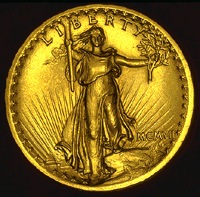
Numismatic coins, especially the pre-1933 U.S. gold coins are highly sought after by asture collectors and investors for more than their pure gold content. The Saint-Gaudens, the Liberty series, and the Indian Head U.S. gold coins are admired and collected worldwide for their historical significance, beauty, and rarity.

Unlike gold that is minted by the tons annually, U.S. Gold coins minted prior to 1933 have a fixed and limited supply. No more will be minted ever and the older they get, the more highly prized they become as important pieces of American history.

We hope your visit will encourage you to add more rare and valuable U.S. gold coins to your collection and to learn how to build sets that will appreciate in value and be greatly admired for many generations to come.

Sponsored By: gold coin

By STEVE RENNER

Steve is the ceo of cashgcards-goldlynks
rare/gold coin club
he was the best isp in 1997
check out his about us page at
http://goldlynks.tripod.com
this article is free for distribution

Article Source: http://EzineArticles.com/?expert=Steve_Renner
Identifying US Coins with Bullish Futures


Sponsored By: gold coin

Okay, let’s get something straight… I do not advocate the purchase of United States coins strictly for investment purposes. Like most traditional collectors, I believe coins are to be primarily appreciated for their artistic beauty, historical connections, and the joy of pursuing them. However, it should be no secret that a significant number of us do add to our numismatic holdings while simultaneously peeking at the payback angle, too.

In truth, there are probably substantial numbers of traditional collectors who prefer to acquire coins destined to increase in esteem and value over time; treasured heirlooms and a source of pride to be passed from one generation to the next. On the flip side of this equation, it seems implausible that anyone would buy a coin with the hope or expectation to see it stagnate or decrease in value. Indeed, any commentator who suggests the words “investment” and “coins” should never appear in close proximity to one another is ignoring a heavily populated segment of our hobby.

Now that we’ve established that it’s not numismatic heresy to seek coins with strong upside possibilities, let’s get down to basics. The guiding principle is simple: Any coin that has demonstrated solid, consistent gains over a long period of time is likely to show continued growth in the years ahead. Easily said, but as we shall soon see, not so easily put into practice.

So exactly how does a one identify coins with a potentially bullish future? The best clues are revealed by analyzing the retail value trends over a long period of time for a given coin. Observing current prices alone does not yield enough information to correctly evaluate prospective price movements. What was the coin selling for two or three years ago compared to today? Dig deeper, and find the market price for the same coin 5-10 years ago. While you’re at it, get something from 20-30 years or more in the past, too. The more good data researched, the more reliable will be your final conclusions. Now whip out your spreadsheet and chart the numbers, or compute annualized rates of return. Flat or negative trends are bad. Positive trends are good. Steep positive trends are best. Any coin displaying a proven annualized growth pattern of at least 5-10% over a span of many years qualifies as an attractive option for the collector desiring coins headed for much higher price levels a few years down the road.

During the course of my lengthy numismatic career, I’ve researched the long term value trends of most collectible US coins. Thanks to my trusty computer, I’ve calculated annualized compounded percentage return rates and honed in on a handful of coins that have consistently beaten the overall coin market averages. Unfortunately, the blue-chippers are scarcely encountered. Perhaps it is this fact that explains why so many well-intentioned hobby purists scorn the idea of blending coin collecting with the profit motive.

Individuals whose objective is to satisfy their numismatic pleasure by assembling a collection certain to be the envy of tomorrow’s collectors must do their homework today. Remember to research historic value trends and evaluate growth potential based on previous performance. One last word of advice… never loose sight of the fact that you are handling artifacts of America’s past, and that all of us are merely their temporary custodians. Respect these coins and the history they represent, and you’ll always discover new avenues of adventure not found in most other investment opportunities.

Sponsored By: gold coin

Article author Daniel J. Goevert is the webmaster of US Coin Values Advisor www.us-coin-values-advisor.com. This site specializes in US coin value trends, plus offers detailed coin collecting advice as well as an illustrated history of the United States and the US Mint.

A Case of Coin Telemarketing Fraud.


Sponsored By: gold coin


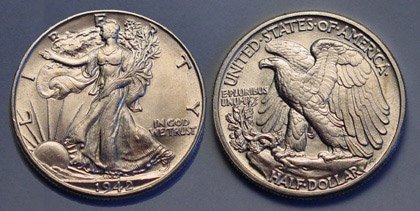
Avoiding Fraud and Making Informed Decisions in Coin Investments: Walking Liberty Half Dollars.

One day back in 1985, I received an unexpected phone call at my office from a man named Gordon Carl (not his real name - but whose real name I'll never forget). The thing that initially struck me the most about the polished Mr. Carl was his heavy New York accent, like something you might hear in a gangster movie. The purpose of his call: to offer me a "great deal" in rare coins. As a result of that conversation, I agreed to purchase five 1943 Walking Liberty half dollars Mr. Carl described as MS-65 specimens. Furthermore, he guaranteed that his firm would buy the coins back from me at any time of my choosing, paying 5% less than the "Grey Sheet" bid price. As an unmarried "yuppie" (now there's a word you don't hear much anymore), I calculated that I could afford the $1375 required to make the purchase. Perhaps more than anything, greed clouded my judgment, and like a fool, I trusted Mr. Carl and dropped a check in the mail the next day.Later in 1985, Mr. Carl's company changed names. Rather than interpreting this as a flashing red warning signal, I eagerly sought to add more coins to my portfolio. Being a gregarious sort of fellow, I attempted to establish a friendly rapport with Mr. Carl and his associates. Looking back after all these years, what has irritated me perhaps more than anything is how this shyster must have smirked every time he heard my voice, for what a gullible, willing dupe I was.

In 1989, I decided it was time to cash in my coins, so I called Mr. Carl. Not surprisingly, the company was operating under yet another name. I couldn't get through to Mr. Carl, but ended up talking to his brother, Maurice, with whom I had never spoken. I informed him that I wanted to liquidate my Walking Liberty half dollars in accordance with the buy-back policy under which I had purchased them. Much to my disgust, he coldly declined, indicating his organization was not affiliated with those earlier companies, and was under no obligation whatsoever. In fact, he insinuated that he had never even heard of these outfits before, despite the fact that his brother, Gordon, factored prominently in these businesses. At that moment, the fog was finally lifted from my eyes: I had been scammed! Not knowing what else to do, I politely said goodbye, and hung up. I sat there, staring at the phone for what seemed like an eternity, in stunned disbelief.

Several days later, I took my 1943 Walkers to a local coin dealer, the first step in submitting them to a third party grading service. I didn't expect them to grade out as MS-65, but if they came back as MS-60 or MS-63, I could at least begin there to cut my losses. The dealer studied a couple of the coins closely under magnification, and then sadly declared the coins were damaged due to improper cleaning. He advised me not to have them professionally graded, because the cost of grading probably exceeded the value of the coins. With few options left, I put the tainted Walkers in storage, vowing never to repeat this experience.

Let's now flash forward to the present time. Normally, I don't like antagonizing myself, so it was with some reluctance that I fired up the computer to play the game "What If?" That is, what if I had spent my $1375 with a reputable dealer in 1985 to purchase Walking Liberty half dollars? What kind of value increases would I be enjoying today had I been smarter back then? To answer this question, I first retrieved the historic value trend tables I researched in late 2005 for Walking Liberty half dollars. For each date, mintmark, and condition, I noted their values in 1985, and placed them next to their corresponding values in 2005, for a "before and after" comparison. In all, there were about 450 such comparisons. Next, I calculated an annual compounded percentage return rate for each data pair, and sorted them from highest to lowest. I then listed the top 20 for closer examination:

Sponsored By: gold coin

Date Condition 1985 Value 2005 Value Annual ROR
1917-D Obv MS-65 $3000 $27500 11.13%
1921-S F-12 $30.00 $250 10.62%
1919-D MS-65 $15000 $115000 10.19%
1917-S Obv MS-65 $5250 $35000 9.45%
1918-S MS-65 $3000 $17500 8.76%
1916-S VG-8 $30.00 $150 7.97%
1917-S Rev MS-65 $3500 $17500 7.97%
1921-S VF-20 $200 $1000 7.97%
1921-S XF-40 $1000 $5000 7.97%
1921-S MS-65 $22500 $110000 7.85%
1918-D F-12 $8.50 $40.00 7.65%
1918-D MS-65 $5500 $25000 7.48%
1921-S VG-8 $17.50 $75.00 7.18%
1921-D MS-65 $6500 $27500 7.11%
1916-D VG-8 $12.50 $50.00 6.82%
1938-D F-12 $25.00 $100 6.82%
1938-D VG-8 $20.00 $80.00 6.82%
1920-S MS-65 $3750 $15000 6.82%
1917-D Rev VF-20 $45.00 $175 6.68%
1938-D VF-20 $32.50 $125 6.62%

The Walker with the best return since 1985 is the 1917-D (MM on Obverse) in MS-65 condition. At $3000, it was well beyond the $1375 available to me to spend on numismatics in 1985, as were all nine MS-65 coins appearing on the above Top 20 list. However, the remainder of the Top 20 represented coins in circulated grades, and all were within my price range. Had I directed my hard-earned cash toward the purchase of a legitimate example of each of these coins, I would have spent $1421, just barely above what I forked over to Mr. Carl. Today, those same Walking Liberty halves are cumulatively worth more than $7000. In pure financial terms, this increase computes to an annual compounded return rate of nearly 8.00%. If only I had known then.

Take note that all 11 of the Walkers that I wish I had added to my collection in 1985 are recognized as key and semi-key dates in the Walking Liberty half dollar series. The fact that they are for well-circulated specimens (typically not the object of affection for promoters and speculators) suggests that what has propelled these coins to ever-increasing heights over the years is fueled by consistent collector demand. We can expect to see similar patterns in the future. If I were to conduct this same study in the year 2025, comparing retail values then to what they were in the year 2005, the Top 20 would probably strongly resemble the Top 20 in 2005.

What became of the 1943 Walking Liberty half dollars Mr. Carl suckered me into buying? Well, I still have them, squirreled away in a bank deposit box. I haven't even looked at them in a decade or so. As I was writing the final words of this article, it finally dawned on me to ask one more question: how would my investment have performed had these been bona-fide MS-65 specimens? Taking the same body of data used to derive the Top 20 above, I started thumbing down the list. going down, down, and down some more. Finally, I came across the 1943 in MS-65 condition, on line 419. The annual rate of return of this coin since 1985 is a dismal -2.13%. That's a NEGATIVE 2.13%. Ironically, even had Mr. Carl been an honest businessman, it still would have been a lousy investment for me.

There are two lessons to be learned here: (1) If interested in seeing your coins increase substantially in value in the years ahead, purchase coins that have already demonstrated a long record of consistent price advancements, which usually are the key and semi-key dates for a given series, and (2) Deal only with reputable people.

So what ever happened to the slimy Mr. Carl and his band of thieves? Well, perhaps there is some justice in this world, after all. In late 1989, about the time I discovered I was being victimized, the United States Postal Inspection Service began an undercover sting operation of the company. Apparently, I wasn't the only unhappy customer, but my losses were minimal compared to the sums bilked out of others. In February, 1991, postal agents stormed the "boiler room" outfit, executing a federal search warrant based on a complaint involving the alleged fraudulent selling of coins through the mail. Mr. Carl and others were arrested and led away in handcuffs.

Postal authorities publicized that anyone with grievances against the company was encouraged to contact them, to help bolster their case against the defendants. Since I kept meticulous records, I had no trouble assembling incriminating documents and forwarded everything to the Inspector's office, tied together by my personal story. I never heard exactly how the case was resolved, but it seems almost certain these crooked telemarketers got what they deserved. As for me, I won a small measure of satisfaction, knowing that I provided evidence to help expose them. Now, if I could just figure out what to do with those defiled 1943 Walkers...

by Daniel J. Goevert
http://www.us-coin-values-advisor.com
Our RSS feed: http://www.us-coin-values-advisor.com/coin-values.xml

Sponsored By: gold coin


Friday, May 12, 2006

Feel the Gold Rush with Gold Coins


This post was Sponsored By : gold coin

A lot of people find collecting gold coins as not only an incredibly interesting hobby but a fairly lucrative one as well! Over time, your collection will accure value and parts of it can be sold if you desire. This way, you will have additional income for yourself later in life in addition to a fantastic collection of valuable coins.

1. Face To Face: Coin Collectors Know Best

The internet is home to a lot of gold coin dealers wherein you can meet all sorts of people from all over the world who are into both buying and selling gold coins. Of course, it is a rather convenient venue for you to be able to do your transactions. You must be extremely conscious, however, when it comes to dealing with other gold coin collectors that you will meet through the internet. While there are some real gold coin enthusiasts in the internet, there are also those people who are posing as gold coin collectors and are just looking to rip you off.

2. Why Gold Coins?

The history of gold coins dates as far back as 2,700 years ago. The first gold coins in the world were issued in Lydia around 640 B.C. certain internet websites will provide you with a lot of information about the history of gold coins.

As money, gold coins have been a convenient way for people to do their transactions. Gold was only used for coins that were considered of a higher value. As gold is not the most common ore, it became impractical for gold to be used in the common coin systems of all major countries. This means a collection of gold coins is extremely rare due to the fact that gold coins are no longer being produced.

This post was Sponsored By : gold coin

3. Gold Coins For Investment

- Gold is sensible investment: all major countries use reserves of gold (such as Fort Knox) to maintain their national worth
- A highly convenient investment
- Physical gold is extremely stable in value

4. Commemorative Coins

When it comes to the commemorative gold coins, since gold is deemed as a highly valuable kind of metal, it is an obvious choice when it comes to making or producing special commemorative coins. In the past, there are sets of gold coins that were just issued to mark coronations as well as other important state events. A lot of financial reserves that are being held by banks are in the form of gold coins. Gold coins are a desired form of a reserved asset since gold coins are not really used for circulation anymore.

5. About Collectors

There are a lot of various gold coin sellers, buyers as well as collectors who are waiting to bid on the best kind of gold coins in the market most especially in the internet. For most gold coins that can be bought as well as sold at prices that are closely related to their intrinsic gold content. The most popular bullion gold coins are the krugerrands as well as the sovereigns.

For most gold coin collectors, there are the highly coveted rare gold coins and a lot of gold coin collectors are interested in these rare gold coins that they will offer high bids just to be able to get their hands on these.

A lot of people who are looking for things to collect are in real treat if ever they try out collecting gold coins most especially because gold coins can be bought in highly excellent and may be in even mint condition for only a relatively low premium over the gold coin’s gold content. Also, since the coin is made from gold, it is highly unlikely that it will tarnish or even discolor.

If you are looking into collecting gold coins, first research the various gold coins that are available in the market today. Find out how much they are really worth due to their gold content, and then factor in any additional value to the coin for being rare. Always be on the lookout for fake coins, and have coins appraised by a gold coin expert to avoid large differences in price.

This post was Sponsored By : gold coin

For more great gold coin related articles and resources check out http://www.coin-resource.com

Article Source: http://EzineArticles.com/?expert=John_Morris